
Best apps live in Setapp
- How To Download Google Chrome To Macbook Air
- Google Chrome Macbook M1
- How To Connect Google Chrome To Macbook
- Google Chrome Macbook Touch Bar
- Download Google Chrome To Macbook
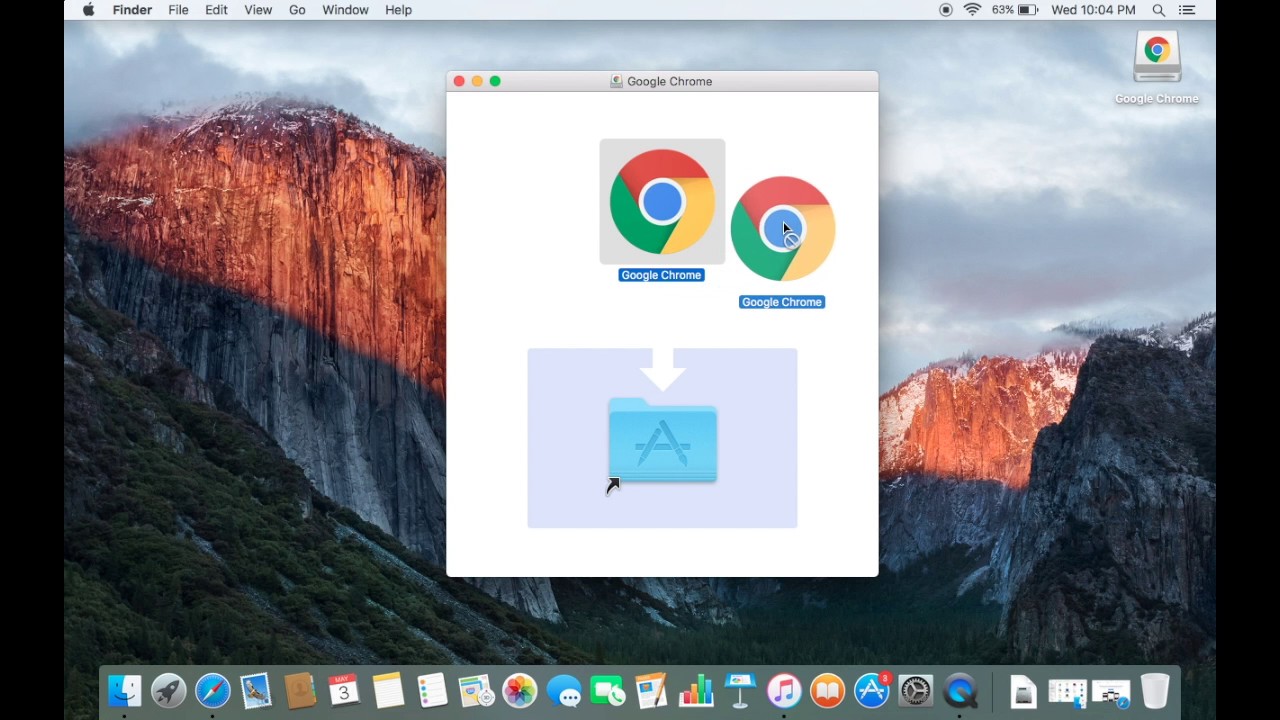
How to Remove Google Chrome's Profile Information. Chrome stores some profile information, bookmarks, and browsing history on your Mac. This data may be helpful if you intend to reinstall Chrome in the future. However, if you'd like a fresh installation of Chrome, or you want to remove all remnants of it, you'll need to delete this data too. A Mac with Google Chrome installed. A TV with a free HDMI socket. A plug socket or a powered USB socket on your TV. A Wi-Fi network. In order to Chromecast from your Mac to your TV, your Mac and Chromecast will need to be on the same Wi-Fi network. So, the first step is to connect your Chromecast to Wi-Fi. Google Chrome works well with most major platforms and it is easy to install the browser. However, some Mac users have experienced issues with using Google Chrome on their Macs. According to reports, Google Chrome won’t open on macOS Catalina. After installing the browser on Catalina, the Chrome browser won’t launch for some reason. Adding and opening bookmarks on Google Chrome is actually not a complicated thing to do. Before you export bookmarks from Google Chrome on Mac, let's quickly browse the steps of how to add and open a bookmark. Here is how you can do it. Adding A Bookmark On Google Chrome. Go ahead and launch the Google Chrome browser on your Mac. Install Chrome on Mac. Download the installation file.; Open the file called 'googlechrome.dmg.' In the window that opens, find Chrome.; Drag Chrome to the Applications folder.
In the early days of Mac, its default web browser wasn’t what you might expect. Surprisingly for all, Microsoft had struck a deal with Apple to ship Macs with Internet Explorer right out of the box. However, once the contract was done, Apple quickly released their own browser called Safari.
Unfortunately for Apple’s new browser, a stronger alternative under the name of Google Chrome browser had already snapped up the market share. Mac users were attracted to Google due to its search and mail services — roughly one third of all Macs use Chrome as their default browser as of 2019. With only a few options competing for the same market, the name of the game has become cross-platform.
Boost browsing experience with Setapp

Get an ultimate collection of Mac apps that help you speed up browsing, hide specific pages, or remove any traces of the browsing history.
Getting Started With Chrome On Mac
How To Download Google Chrome To Macbook Air
Web browsers have come a long way in recent years, with most reaching some sort of feature parity and common user experience, which makes switching between them fairly easy. Chrome browser for Mac is no exception, but the sheer number of users have led to it having an interesting advantage in the marketplace — mostly due to Chrome’s presence on any device, from iPhones to Windows desktops. If you’ve been considering a switch and are wondering how to install Chrome on Mac, your best guide is below.
The benefits of Google Chrome for Mac
There are good reasons for Mac users to prefer Chrome, especially with its natural overlap with other Google products. Users, for example, can sign into their Google Account on Chrome and have it synchronize with their other devices, integrating account data and preferences accordingly. More reasons to make the switch to Chrome include:

Web developer tools make it easy to test web apps on Chrome, which means strong compatibility with the latest sites and tech standards
Support by nearly every device and operating system, including Windows and Apple products, whereas Safari is only available in iOS and macOS
An impressive library of browser extensions, which grant additional capabilities, such as ad-blocking and custom integrations. It’s true that most other browsers also use extensions, but the wider support for Chrome means more developers can get the best bang for their buck by releasing their products on Chrome first.
Truth be told, Chrome isn’t without its downsides. A common complaint one might hear is that Google Chrome for Mac uses a lot of system memory (and therefore laptop battery), especially when lots of tabs are open and running.
One might argue it’s because Chrome has some of the best security and malware protection, which inherently uses more RAM and battery to accommodate its scans — but whatever the reason, it’s not impossible to mitigate — just use Endurance.
Endurance is a lightweight utility that helps you take back the control of your battery life, sometimes extending it by up to 20%. In just a few clicks, Endurance will lower your processor speed, hide background apps, and dim the screen to preserve battery when you don’t need to be using it in full brightness — perfect for when you’re in and out of Google Chrome.
How to download and install Chrome for Mac
Not sure how to install Google Chrome for Mac? It’s all very simple, but you’ll need to use a different web browser (like Safari) to download Chrome for Mac first:
Open Safari (or other web browser) then navigate to google.com/chrome
Hit Download Chrome for Mac
A new window will appear asking you to agree to the Terms of Use. If you agree, click on Accept and Install.
When the Chrome for Mac download is finished, open the file called googlechrome.dmg and go through the installation process
Drag the Chrome icon to the Applications folder when asked — the last step before you finally have Chrome on Mac
Launch Google Chrome from Applications or straight from your Dock
Remove the Google Chrome download for Mac from the Downloads folder by dragging it to the Trash
Now that you know how to download Google Chrome, you might want to make Chrome default browser on Mac. To do this, simply open it and click the three dots in the top-right corner, followed by Settings, then in the Default Browser section click Make Default.
If you’re wondering how to update Google Chrome on Mac, you don’t have to — Chrome will do this automatically the next time you launch the browser, so you never have to worry about having to look for the latest version.
Making the best use of Google Chrome
Chrome is already a fast web browser, but it can be even faster if you take full advantage of its keyboard shortcuts. From how to search a page on Mac through to opening and closing tabs, here are a few to help you become more productive:
Open a private window for browsing (called Incognito mode) with ⌘ + Shift + N
Open a new tab in a snap using ⌘ + T
Close that same tab by hitting ⌘ + W
Jump to specific tabs holding Command and selecting a number (e.g. 1, 2, or 9). This shortcut will take you directly to the tab number reading from left to right.
Zoom in and out with ⌘ and tapping the + or - keys
Looking for how to search a page on Mac? You can press ⌘ + L to go to Chrome’s URL bar, which also doubles as the Google search engine — this makes searching for new pages and websites easier, as you no longer have to navigate to google.com first.
Need to know how to search for a word on a web page in Chrome for Mac? Try ⌘ + F.
Those are just a few of the built-in shortcuts on Chrome, but there may be times when you need more — such as a quick and easy way to take and store screenshots of your web pages. That’s where Inboard comes in handy.
Capture webpages with Inboard
Get Inboard, an app that enables you to quickly take a screenshot of any part of a webpage as well as organizes screenshots for you.
Inboard is an app that lets you quickly take a screenshot of the full page or just a specific part, then save it to a moodboard among your other favorite images for inspiration. It’s like Pinterest but on your desktop, and it can even hook into your Dribble account to measure likes.
Filter software for mac. To take screenshots with Inboard:
Go to the app’s icon in menu bar and select Capture Screenshot or Capture Web Page
For webpages, Inboard will ask you to install a browser extension
Once you have the extension, simply click it on any website to produce a full screenshot
Another tip for making the most out of Chrome is managing your privacy and security better — using a password manager.
Secrets is an app that manages all of your passwords in one place. Using industry-standard PGP encryption, you can store, view, and update all of your passwords without worrying about being hacked or compromised. It syncs with all of your devices, and even manages credit card and other information — without handing it all over to Google.
Check for office updates on mac. Now that you know how to download Chrome on Mac and some of the reasons it’s so popular — you’re ready to go. To really make the most out of Chrome though, you’ll want to explore Endurance, Inboard, and Secrets. Best of all, you can do so for free with a 7-day trial on Setapp, a subscription service for Mac that has over 150 exceptionally useful apps to enrich your digital life.
Meantime, prepare for all the awesome things you can do with Setapp. Betternet for mac os.
Read onSign Up
Navigation
| To do this | Press this |
|---|---|
| Open a new window | ⌘ + N |
| Open a new tab | ⌘ + T |
| Open a new window in incognito mode | ⌘ + Shift + N |
| Open a file from your computer in Google Chrome | Press ⌘ + O, then select a file |
| Open the link in a new tab in the background | Press ⌘ and click a link |
| Open the link in a new tab and switches to the newly opened tab | Press ⌘ + Shift and click a link |
| Open the link in a new window | Press Shift and click a link |
| Reopen the last tab you've closed. Google Chrome remembers the last 10 tabs you've closed | ⌘ + Shift + T |
| Open the tab in a new window | Drag a tab out of the tab strip |
| Open the tab in the existing window | Drag a tab out of the tab strip and into an existing window |
| Switch to the next tab | Press ⌘ + Option and the right arrow together |
| Switch to the previous tab | Press ⌘ + Option and the left arrow together |
| Close the current tab or pop-up | ⌘ + W |
| Close the current window | ⌘ + Shift + W |
| Display your browsing history in the tab | Click and hold either the Back or Forward arrow in the browser toolbar |
| Go to the previous page in your browsing history for the tab | Press Delete or ⌘ + [ |
| Go to the next page in your browsing history for the tab | Press Shift+Delete or ⌘ + ] |
| Save the link as a bookmark | Drag a link to the bookmarks bar |
| Save your current webpage as a bookmark | ⌘ + D |
| Save all open tabs as bookmarks in a new folder | ⌘ + Shift + D |
| Maximize the window | Press Shift while clicking the + button in the top left corner of the window |
| Minimize the window | ⌘ + M |
| Hide Google Chrome | ⌘ + H |
| Hide all other windows | ⌘ + Option + H |
| Close Google Chrome | ⌘ + Q |
Webpage
| To do this | Press this |
|---|---|
| Print your current page | ⌘ + P |
| Open the Page Setup dialog | ⌘ + Shift + P |
| Save your current page | ⌘ + S |
| Email your current page | ⌘ + Shift + I |
| Reload your current page | ⌘ + R |
| Open the find bar | ⌘ + F |
| Find the next match for your input in the find bar | ⌘ + G |
| Find the previous match for your input in the find bar | ⌘ + Shift + G or Shift + Enter |
| Use selection for find | ⌘ + E |
| Jump to selection | ⌘ + J |
| Download the target of the link | Press Option and click a link |
| Open your page in full-screen mode. Press ⌘-Shift-F again to exit full-screen | ⌘ + Ctrl + F |
| Enlarge everything on the page | ⌘ + Plus sign |
| Make everything on the page smaller | ⌘ + Minus sign |
| Return everything on the page to normal size | ⌘ + 0 |
| Open your home page in your current tab | ⌘ + Shift + H |
| Scroll down the web page | Space bar |
| Search the web | ⌘ + Option + F |
Address Bar
Google Chrome Macbook M1
| To do this | Press this |
|---|---|
| Perform a search using your default search engine | Type a search term, then press Enter |
| Perform a search using the search engine associated with the keyword | Type a search engine keyword, press Space, type a search term, and press Enter |
| Perform a search using the search engine associated with the URL | Begin typing a search engine URL, press Tab when prompted, type a search term, and press Enter |
| Open the URL in a new background tab | Type a URL, then press ⌘ + Enter |
| Highlight the URL | ⌘ + L |
| Move your cursor to the preceding key term in the address bar | Press Option and the left arrow together |
| Move your cursor to the next key term in the address bar | Press Option and the right arrow together |
| Highlight the preceding key term in the address bar | Press Shift + Option and the left arrow together |
| Highlight the next key term in the address bar | Press Shift + Option and the right arrow together |
| Delete the key term that precedes your cursor in the address bar | ⌘ + Delete |
| Delete the entry from your browsing history, if possible | Select an entry in the address bar drop-down menu with your keyboard arrows, then press Shift - Fn - Delete |
How To Connect Google Chrome To Macbook
Tools
Google Chrome Macbook Touch Bar
| To do this | Press this |
|---|---|
| Open Developer Tools | ⌘ + Option + I |
| Open the JavaScript Console | ⌘ + Option + J |
| Open the source of your current page | ⌘ + Option + U |
| Toggle the bookmarks bar on and off | ⌘ + Shift + B |
| Open the bookmark manager | ⌘ + Option + B |
| Open the Settings page | ⌘ + , |
| Open the History page | ⌘ + Y |
| Open the Downloads page | ⌘ + Shift + J |
| Open the Clear Browsing Data dialog | ⌘ + Shift + Delete |
| Switch between multiple users | ⌘ + Shift + M |
Download Google Chrome To Macbook