
Everyone needs physical activity to stay healthy. But it can be hard to find the time in your busy routine.
Move Free Ultra Triple Action Joint Supplement with Type II Collagen, Hyaluronic Acid, and Boron for Joint, Cartilage, and Bone Support, FAMILY PACK OF 150 tablets 4.7 out of 5 stars 70 $48.14 $ 48. 14 ($0.32/Count). For full functionality of this site it is necessary to enable JavaScript. Here are the instructions how to enable JavaScript in your web browser. Moving should be a time of celebration and adventure. Too often, it’s a source of anxiety. We’re targeting the most painful parts of moving and building the premier resource for movers, with tips, tools, advice, and city guides. We were founded with one principle in mind, and it will always carry us through: we will make moving a joy.
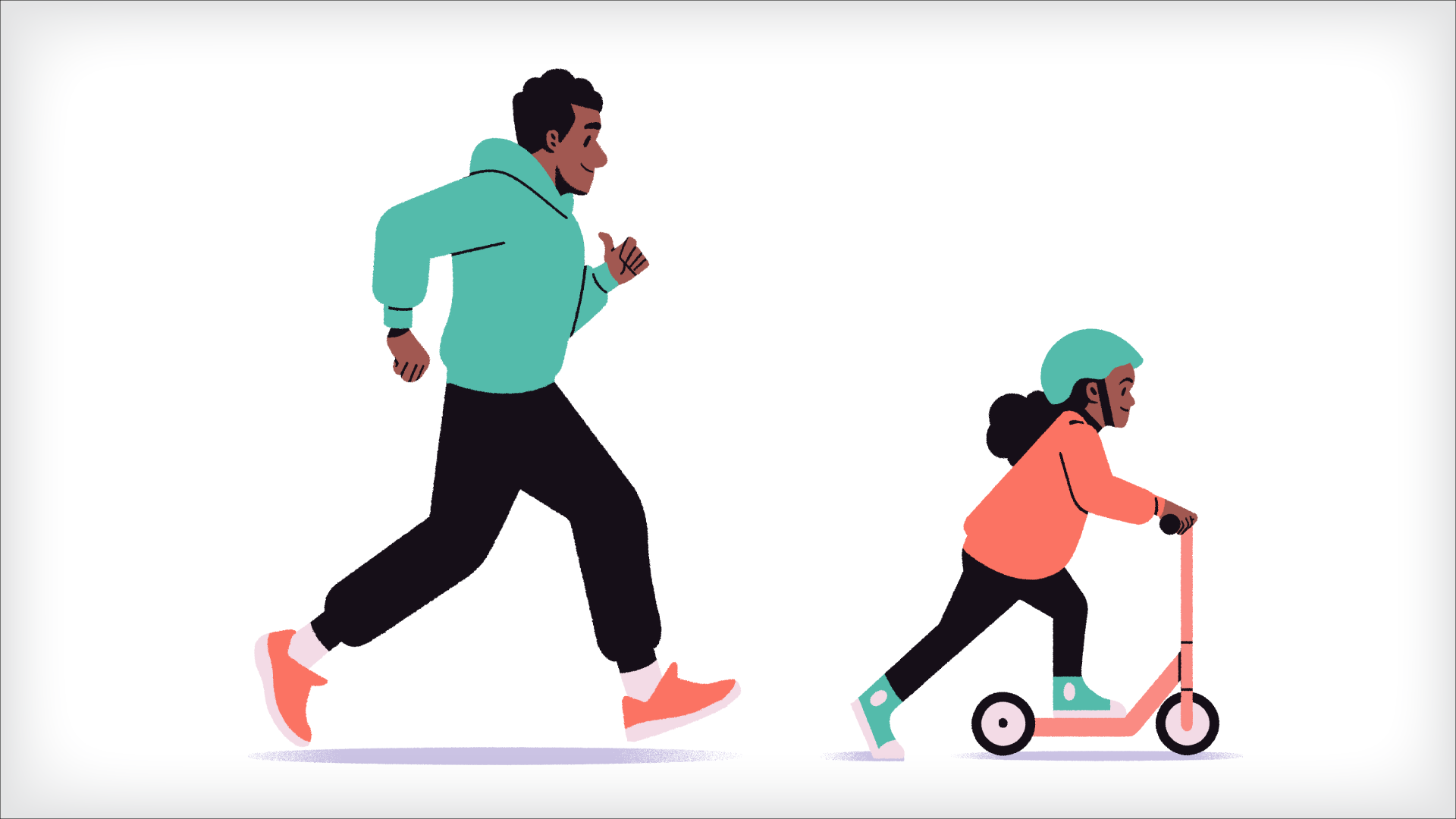
The Move Your Way® tools, videos, and fact sheets on this page have tips that make it easier to get a little more active. And small changes can add up to big health benefits!
No matter who you are, you can find safe, fun ways to get active — to move your way.
Find tools and resources:
Physical activity can make daily life better. So get more active — and start feeling better right away!
- Boost your mood
- Sharpen your focus
- Reduce your stress
- Improve your sleep
Ready to get started?
Use our interactive tool to build your weekly activity plan.
| 1985 MOVE bombing | |
|---|---|
| Location | 6221 Osage Ave, Philadelphia, Pennsylvania, United States |
| Coordinates | 39°57′20″N75°14′49″W / 39.955679°N 75.246836°WCoordinates: 39°57′20″N75°14′49″W / 39.955679°N 75.246836°W |
| Target | MOVE members |
Attack type | Airstrike with improvised explosive device |
| Weapons | Tovex |
| Deaths | 11 |
| Perpetrators | Philadelphia Police Department |
The 1985 MOVE bombing refers to the May 13, 1985 incident in Philadelphia, Pennsylvania, United States, when the Philadelphia Police Department bombed a residential home occupied by the militant black anarcho-primitivist group MOVE, and the Philadelphia Fire Department let the subsequent fire burn out of control following a standoff and firefight.
Background[edit]
In 1981, MOVE relocated to a row house at 6221 Osage Avenue in the Cobbs Creek area of West Philadelphia. Neighbors complained to the city for years about trash around their building, confrontations with neighbors, and bullhorn announcements of political messages by MOVE members.[1][2] The bullhorn was broken and inoperable for the three weeks prior to the police bombing of the row house.[2]
The police obtained arrest warrants in 1985 charging four MOVE occupants with crimes including parole violations, contempt of court, illegal possession of firearms, and making terrorist threats.[3] Mayor Wilson Goode and police commissioner Gregore J. Sambor classified MOVE as a terrorist organization.[4] Police evacuated residents of the area from the neighborhood prior to their action. Residents were told that they would be able to return to their homes after a twenty-four hour period.[5]
Incident[edit]
On Monday, May 13, 1985, nearly five hundred police officers, along with city manager Leo Brooks, arrived in force and attempted to clear the building and execute the arrest warrants.[5][4] Water and electricity were shut off in order to force MOVE members out of the house. Commissioner Sambor read a long speech addressed to MOVE members that started with, 'Attention MOVE: This is America. You have to abide by the laws of the United States.' When the MOVE members did not respond, the police decided to forcibly remove the 13 members from the house,[5] which consisted of eight adults and five children.
There was an armed standoff with police,[6] who lobbed tear gas canisters at the building. The MOVE members fired at them, and a gunfight with semi-automatic and automatic firearms ensued.[7] Police used more than ten thousand rounds of ammunition before Commissioner Sambor ordered that the compound be bombed.[7] From a Pennsylvania State Police helicopter, Philadelphia Police Department Lt. Frank Powell proceeded to drop two one-pound (0.5 kg) bombs (which the police referred to as 'entry devices'[4]) made of FBI-supplied Tovex, a dynamite substitute, targeting a fortified, bunker-like cubicle on the roof of the house.[1]
The ensuing fire killed eleven of the people in the house (John Africa, five other adults, and five children aged 7 to 13). The fire spread and eventually destroyed approximately sixty-five nearby houses. After the fire broke out, firefighters were held back and the high powered water cannons at their disposal, called 'squirts', were not turned on until one and a half hours after the bomb was dropped; therefore the fires were deliberately left to burn. Mayor Goode later testified at a 1996 trial that he had ordered the fire to be put out only after the bunker had burned. Sambor said he received the order, but the fire commissioner testified that he did not receive the order.[8] Ramona Africa, one of the two MOVE survivors from the house, said that police fired at those trying to escape.[9]
Aftermath[edit]
Mayor Goode appointed an investigative commission called the Philadelphia Special Investigation Commission (PSIC, aka MOVE Commission), chaired by William H. Brown, III. Sambor resigned in November 1985; in a speech the following year, he said that he was made a 'surrogate' by Goode.[10]
Bruce Kauffman from Philadelphia Special Investigation Commission interviewed William Richmond, the Philadelphia Fire Commissioner at the time, in which he brought up the fact that the water hoses were not turned on and the fires were deliberately left to burn, to which Richmond admitted.
The MOVE Commission issued its report on March 6, 1986. The report denounced the actions of the city government, stating that dropping a bomb on an occupied row house was unconscionable.[11] Following the release of the report, Goode made a formal public apology.[12] No one from the city government was criminally charged in the attack. The only surviving adult MOVE member, Ramona Africa, was charged and convicted on charges of riot and conspiracy; she served seven years in prison.[13]
In 1996, a federal jury ordered the city to pay a $1.5 million civil suit judgment to survivor Ramona Africa and relatives of two people killed in the bombing. The jury had found that the city used excessive force and violated the members' constitutional protections against unreasonable search and seizure.[8] In 1985 Philadelphia was given the sobriquet 'The City that Bombed Itself'.[14][15]
Movie Sites
In 2005, federal judge Clarence Charles Newcomer presided over a civil trial brought by residents seeking damages for having been displaced by the widespread destruction following the 1985 police bombing of MOVE. A jury awarded them a $12.83 million verdict against the City of Philadelphia.[16]
Move Over Darling
In November 2020, the Philadelphia City Council approved a resolution to formally apologize for the MOVE bombing. The measure also established an annual day of 'observation, reflection and recommitment' on May 13, the anniversary of the bombing.[17][18]
References[edit]
- ^ abFrank Trippett (May 27, 1985). 'It Looks Just Like a War Zone'. TIME magazine. Retrieved 2009-02-15.
The Move property on Osage Avenue had become notorious for its abundant litter of garbage and human waste and for its scurrying rats and dozens of dogs. Bullhorns blared forth obscene tirades and harangues at all times of day and night. MOVE members customarily kept their children out of both clothes and school. They physically assaulted some neighbors and threatened others.
- ^ abAbu-Jamal, Mumia; Bin Wahad, Dhoruba; Shakur, Assata (1993). Still Black, Still Strong. South Pasadena, CA: Semiotext(e). p. 128. ISBN9780936756745.
- ^Trippett, Frank (1985-05-27). 'It Looks Just Like a War Zone'. TIME. Retrieved 2013-05-14.CS1 maint: discouraged parameter (link)
- ^ abcShapiro, Michael J (June 17, 2010). The Time of the City: Politics, Philosophy and Genre. Routledge. p. 108. ISBN9781136977879.
- ^ abcDemby, Gene (May 13, 2015). 'I'm from Philly 30 years later I'm still trying to make sense of the MOVE bombing'. NPR. Retrieved March 18, 2018.
- ^Account of 1985 incident from USA Today.
- ^ abStevens, William K. (14 May 1985). 'Police Drop Bomb on Radicals' Home in Philadelphia'. The New York Times. Archived from the original on 9 November 2020. Retrieved 31 August 2012.CS1 maint: discouraged parameter (link)
- ^ abTerry, Don (1996-06-25). 'Philadelphia Held Liable For Firebomb Fatal to 11'. The New York Times. Retrieved May 13, 2010.
- ^'Philadelphia MOVE Bombing Still Haunts Survivors'. NPR. Retrieved 2013-05-14.
- ^Call, SCOTT J. HIGHAM, The Morning. 'I WAS EXPENDABLE, SAMBOR LEARNED AFTER MOVE FIASCO'. mcall.com.
- ^'Philadelphia Special Investigation (MOVE) Commission Manuscript Collection'. Archived from the original on 2009-01-11. Retrieved 2008-04-12.
- ^Times, WILLIAM K. STEVENS, The New York. 'GOODE OFFERS HIS APOLOGY FOR MOVE'. mcall.com.
- ^Odom, Maida. 'Ramona Africa Given Jail Term For Siege Role'. philly.com. Retrieved 10 May 2016.CS1 maint: discouraged parameter (link)
- ^G. Shaffer; C. Tiger; D. L. Root (2008). Compass American Guides Pennsylvania.
- ^Larry Eichel (May 8, 2005). 'The MOVE Disaster: May 13, 1985'. The Philadelphia Inquirer.
- ^Douglas Martin (August 28, 2005). 'CLARENCE NEWCOMER, 82, LONGTIME FEDERAL JUDGE,'South Florida Sun Sentinel.
- ^Pilkington, Ed (2020-11-13). 'Philadelphia city council apologises for deadly 1985 Move bombing'. the Guardian. Archived from the original on 2020-11-14. Retrieved 2020-11-14.
- ^Ismay, John (2020-11-13). '35 Years After MOVE Bombing That Killed 11, Philadelphia Apologizes'. The New York Times. ISSN0362-4331. Archived from the original on 2020-11-14. Retrieved 2020-11-14.
Movie Theater